
Kaumudi Nalubolu is a Sales and Marketing Analyst at Samsung HVAC specializing in SEO, lead generation, website strategy, and digital marketing. She develops content and web experiences that connect homeowners with innovative HVAC solutions while staying informed on the latest HVAC technologies and product innovations.
Heating and cooling technology has come a long way from simple temperature adjustments. Today's mini split systems can learn usage patterns, automate comfort settings, and connect with smart home platforms to improve efficiency and convenience.
As more homeowners look for mini splits with AI technology, smart controls are becoming one of the most important features to consider when upgrading a home's HVAC system.
What Does "AI-Powered HVAC" Actually Mean?
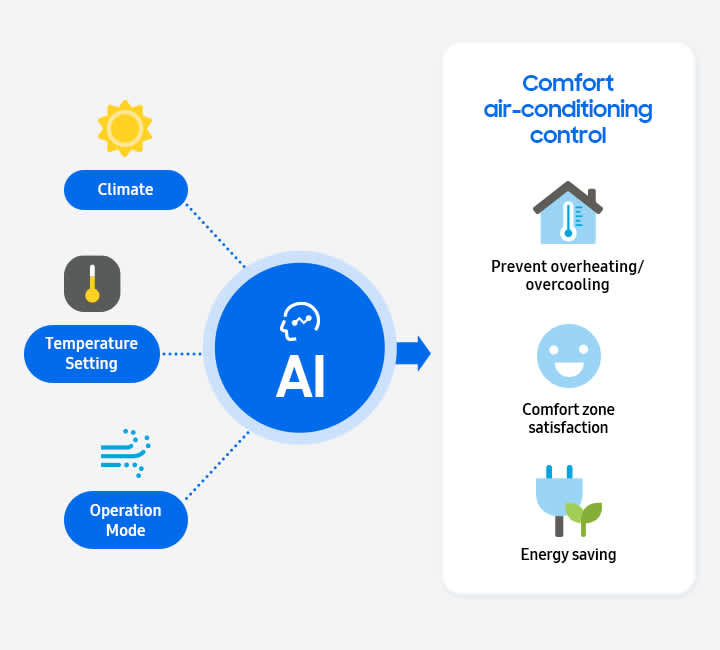
Artificial intelligence in HVAC doesn't mean a system is thinking like a person. Instead, AI-powered systems use data such as temperature preferences, occupancy patterns, weather conditions, and operating history to make smarter decisions automatically.
The goal is simple: deliver the right amount of heating or cooling while minimizing energy consumption.
How Smart Controls Optimize Comfort and Efficiency
Modern smart controls for mini split systems can adjust operation based on changing conditions throughout the day. Instead of running at full capacity continuously, systems can respond to real-time demand and maintain a more consistent indoor environment.
Many homeowners use scheduling features, geofencing, and occupancy sensing to reduce energy usage when rooms are unoccupied while maintaining comfort when they're needed most.
Can AI Thermostats Work with Ductless HVAC Systems?
One of the most common questions homeowners ask is: Can AI thermostats work with ductless HVAC systems?
The answer depends on the equipment and controls being used. Many modern ductless systems now include built-in smart control capabilities, mobile app connectivity, and integrations that allow homeowners to automate comfort settings without relying on traditional thermostats.
As smart home technology continues to evolve, compatibility between AI-driven controls and ductless HVAC systems is becoming increasingly common.
Smart Home Integration and Connected Comfort
Connected HVAC systems allow homeowners to monitor and adjust temperatures from virtually anywhere using a smartphone or tablet.
Platforms like Samsung SmartThings™ and SmartThings Pro help bring HVAC systems into a broader smart home ecosystem, allowing users to manage comfort settings alongside lighting, security, and other connected devices from a single interface.
For homeowners wondering whether Samsung SmartThings works with ductless HVAC, compatible systems can provide a seamless experience that simplifies day-to-day comfort management.
Do Smart Controls Really Save Money?
Smart controls can help reduce energy waste by automatically adjusting operation based on occupancy, schedules, and user behavior.
While actual savings vary by climate, home size, and usage habits, homeowners often see lower energy consumption when automation helps eliminate unnecessary heating and cooling.
When combined with inverter technology, smart controls can further improve efficiency by allowing systems to make smaller, more precise adjustments throughout the day.
What's Next for Connected HVAC?
The future of HVAC is becoming increasingly intelligent. Advances in AI, predictive maintenance, occupancy detection, and connected home platforms are helping systems operate more efficiently than ever before.
As demand grows for mini splits with inverter technology and smart controls, homeowners can expect HVAC systems to become even more personalized, automated, and energy conscious.
Smarter Comfort Starts Here
Today's mini split systems do more than heat and cool a space. With AI-driven features, smart controls, and connected home integration, homeowners have more control over comfort, convenience, and energy efficiency than ever before. As technology continues to evolve, connected HVAC solutions will play an even greater role in creating smarter, more efficient homes.